(I) Advantages and disadvantages of several mainstream prevention and control methods for myopia:
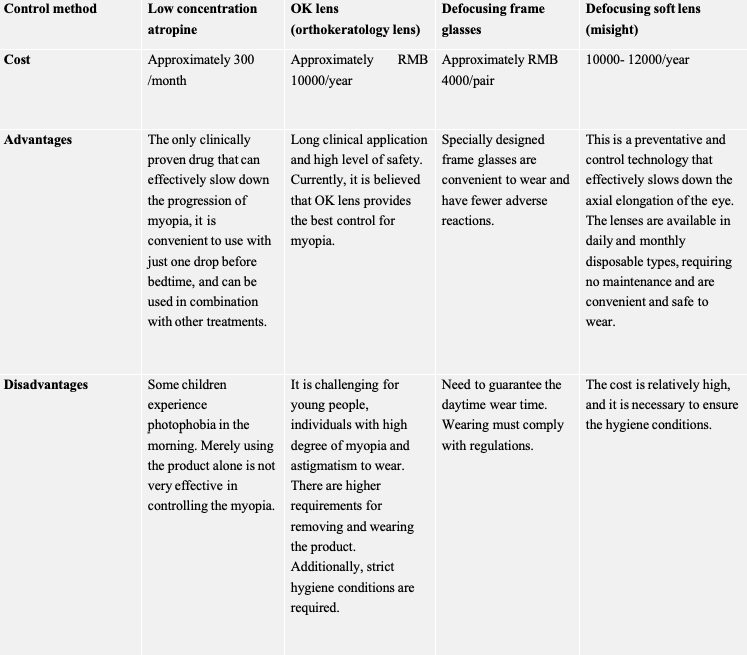
(II) Detailed description of advantages and disadvantages of three mainstream myopia prevention and control products
01 Orthokeratology lens
What is OK lens?
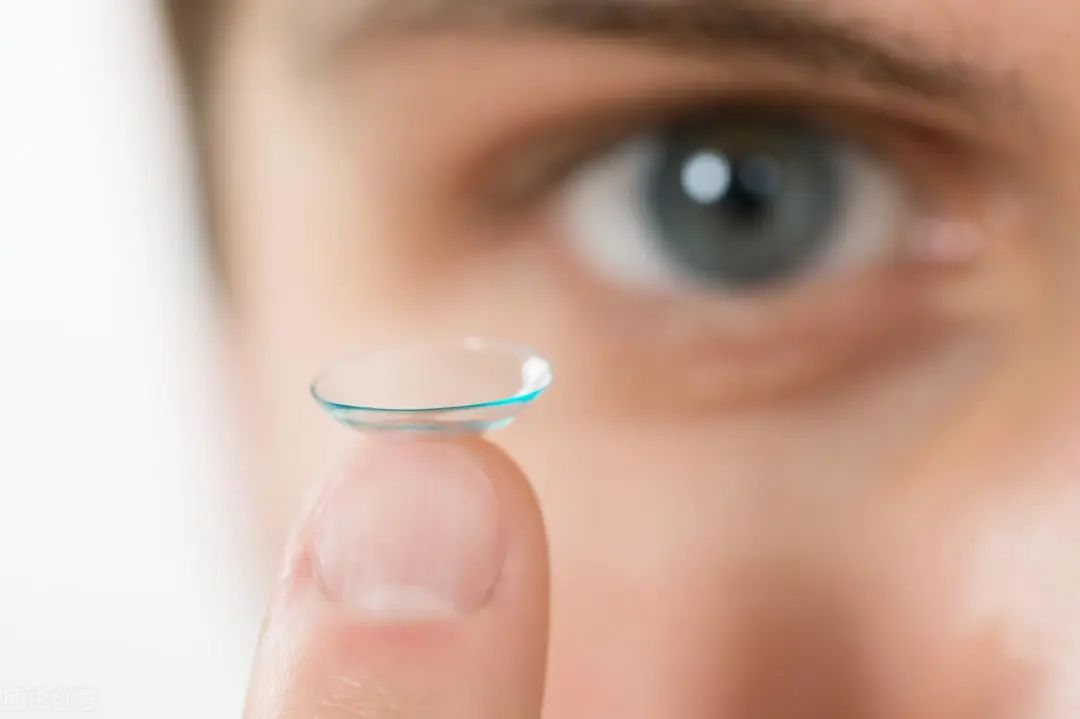
The commonly mentioned "OK lens" is actually an orthokeratology lens, which is a special type of RGP contact lens. Regular RGP lenses are used to correct vision, while orthokeratology lenses are used for "corneal reshaping," which improves vision by changing the shape of the cornea. After wearing orthokeratology lenses, the central part of cornea becomes relatively flatter, temporarily reducing a certain degree of myopia. It improves uncorrected visual acuity (UCVA) during the day and is a reversible, non-surgical, physical corrective treatment method.
Disadvantages:
1. The waiting time for glasses is long. As every pair of glasses is tailor-made, it takes approximately one month from the prescription and ordering process to receiving the glasses. Customization of frame glasses can be done quickly, with fast delivery available on the same day.
2. The cost is high. Even the more affordable orthokeratology lenses typically cost around RMB 4,000 to 5,000, while high-end products can exceed RMB 10,000. This cost does not include the monthly maintenance fees. The average maintenance cost is about RMB 300/month. In addition, a pair of OK lenses can be used for up to 1 year to 1 and a half years. Getting a new pair of OK lenses requires a long waiting time and the same cost.
3. Troublesome The small OK lens must be carefully taken care of. The wearer needs to pay attention to hygiene and maintain cleanliness of hands and eyes. The lenses must be worn at night and removed in the morning, and the same work needs to be repeated every day. Additionally, one must be careful when wearing OK lenses, as if one lens gets damaged, the entire pair needs to be replaced.
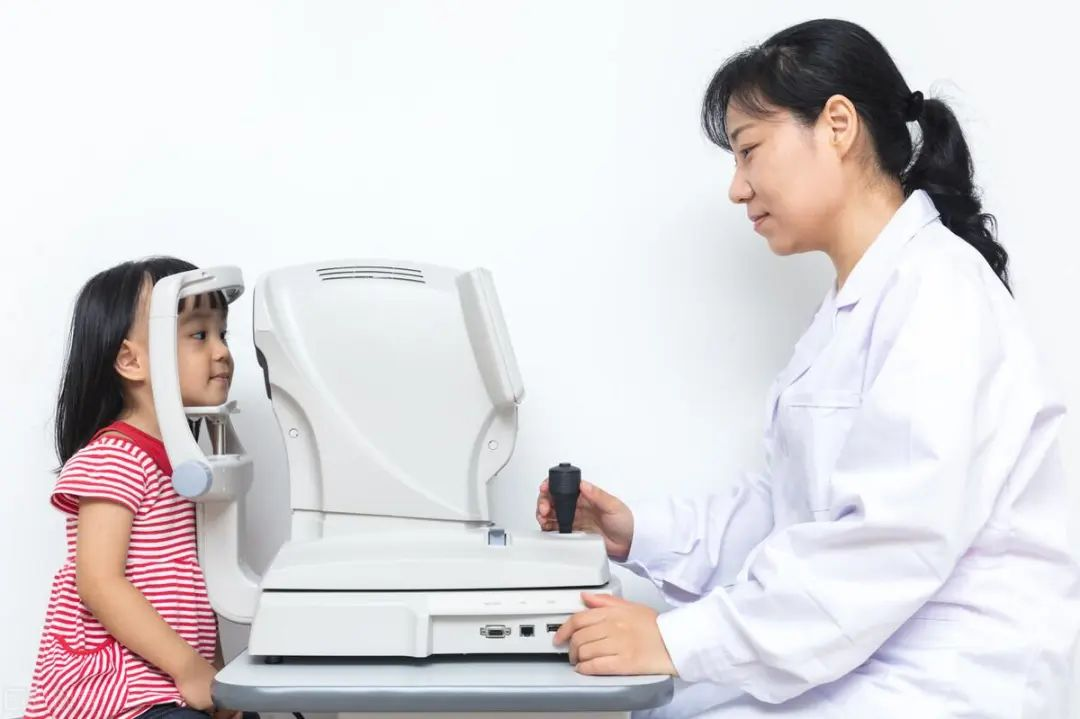
4. Time-consuming It is necessary for the wearers of orthokeratology lenses to have a follow-up examination on the second day and the first week after wearing the lenses. After that, a monthly follow-up visit is required averagely. Generally, if you are wearing orthokeratology lenses, you would need to visit the hospital at least 10 times in a year.
5. High requirement. To wear OK lenses, your eyes must meet the required conditions. In addition, you need to wear them for 8 - 10 hours to achieve the desired effect. It is not possible to stay up late or sleep in. People who wear OK lenses should not keep long nails, as they need to be careful not to scratch the lenses with their nails. Hand and eye hygiene should be given special attention, as neglecting it can easily lead to eye inflammation. You should not wear orthokeratology lenses, when you have a cold, cough, or fever.
6. Orthokeratology lenses are contact lenses that carry the risk of infection when worn on the eyes. The point staining around the cornea is often unrelated to the use of orthokeratology lens and is associated with other eye conditions, such as ectropion, meibomian gland dysfunction, dry eye, allergic conjunctivitis, and allergic reactions to contact lens solutions. Continuous central corneal staining is often caused by poor lens fitting, lens misalignment/adhesion, and other fitting issues. It requires timely adjustment of lens parameters to improve the fit. Therefore, it is crucial to seek timely, routine check-ups, or visit the hospital if there is any discomfort in the eye.
Advantages:
1. Good effect in controlling the progression of myopia. Wearing OK lens while maintaining good eye-using habits can achieve no increase in myopia degree for the whole year.
2. You can have normal daytime uncorrected visual acuity. OK lens is worn at night and removed during the day, so you can have normal vision throughout the day without wearing it. You can participate in intense sports such as basketball, football, and so on normally. For children who love sports, it is a good choice.
In the world, there is no perfect thing. Corneal reshaping has both advantages and disadvantages. Although orthokeratology lens is expensive, cumbersome to operate, and carry a certain risk of infection, but the two advantages of orthokeratology lens have hit the pain points of many parents. Therefore, in recent years, there have been increasing numbers of children who are paying attention to and using orthokeratology lenses. The success of corneal reshaping depends on the combination of various factors, including appropriate lens fitting, correct and standardized lens usage and care, regular follow-up visits, timely management of complications, and so on.
02 Defocusing lens
Advantages
(1) Simple eye examination and lens fitting: Multi-point myopic defocusing lens is a special type of single-focus lens, with simple eye examination and lens fitting process.
(2) Highly comfort: Multi-point myopic defocusing lenses have no image blur area, do not come into contact with the eyes, and do not touch the cornea like corneal contact lenses do, so they do not cause discomfort or problems with infection due to improper care.
(3) Simple care: It is simple to care compared to other lenses, such as OK lenses that require handwashing and disinfection every time they are removed or worn, and require special care solution.
(4) Delay myopia progression: It can control the average elongation of the eyeball axis by 0.05 mm/year and the average progression of myopia degree by 0.12 D (12 diopters)/year.
(5) Excellent lens design technology: It meets the imaging system of the human retina. The image presented on the retina after the child wears the lens is normal, stable, and not easily distorted.
(6) Better wearing comfort: Children are more likely to adapt to new lenses with better comfort. They can adapt to the new lenses after 2-3 days of wearing, effectively slowing down the progression of refractive errors and taking care of their vision.
Disadvantages
(1) To prevent lens wear, therefore extra attention should be paid to protection during use.
(2) After the light passes through the central defocusing zone of the lens, it is divided into a corrective part for distant vision and a defocusing part for nearsightedness, resulting in a decrease in contrast.
(3) When looking into the distance, without changing the position of the head, only rotating the eyeballs, the central visual acuity will be affected, and the defocusing effect around the retina will also change, thus affecting myopia control effectiveness.
(4) Due to the fact that the image seen through the peripheral defocusing lenses is "clear in the center" and "blurry on the edges", it is necessary to be meticulous about the height of the frame, the distance of the child's pupils, and their height. Therefore, professional institutions should be consulted for prescription and follow-up visits.
03 Low concentration atropine
Why not use low-concentration atropine directly to treat early myopia?
Ophthalmologists state that the prevention and control of myopia in children is a long-term process. The golden period for myopia prevention and control is between the ages of 6 and 15. Myopia prevention and control is a slow disease management process with a longer duration, so when considering treatment methods, the potential long-term side effects should be taken into account.
While studies have indicated the safe use of 0.01% atropine eye drops for children with myopia, additional research is needed to confirm its longer-term safety.
Atropine, as a non-selective antagonist of M receptors, may cause patients to experience a series of visual side effects such as photophobia, glare, and blurred near vision due to pupil dilation and paralytic accommodation.
The use of atropine eye drops at three concentrations of 0.5%, 0.1%, and 0.01% has been associated with varying degrees of accommodative lag, potentially leading to decreased accommodative function in children and resulting in symptoms of visual fatigue with long-term use.
In addition, allergic conjunctivitis is a common complication of long-term use of atropine eye drops. It is mainly characterized by redness, itching, pain in the eyes, swelling of the eyelids, congestion of the conjunctiva, and increased formation of conjunctival follicles. This may be related to drug irritation or drug allergy.